Discover our story
For nearly one hundred years Catholic families of Westerville have gathered in faith, fellowship, and worship as the community of St. Paul the Apostle Church. In 1913, the small, but growing, number of Catholic families in northeastern central Ohio prompted Bishop James J. Hartley of Columbus to ask Father Hugh Ewing to establish a mission church in the predominately Methodist town of Westerville. On September 28, 1913, Father Ewing offered the first Holy Mass of the mission church formed under the patronage of St. Paul the Apostle. Over the next decade Father Ewing traveled monthly from his pastoral assignment at St. Peter’s Church in Columbus to offer Mass and teach Sunday school. The small St. Paul Mission gathered in rented rooms above a local Westerville bakery and pool hall —a place where we now find Graeter’s Ice Cream. In 1924, Father Conrad Conrardy of the Pontifical College Josephinum assumed pastoral care of the young mission due to Father Ewing’s declining health.
The growth of this mission community pressed Bishop Hartley in 1931 to formally establish a parish inviting the Capuchin Friars to guide and shepherd its ministry. With funds collected from parishioners and the Diocese, a small tract of land with a large red-brick residence was purchased just north of the residential district of Westerville. The Friars converted the 13-room brick residence into a monastery and hastily made plans for the parish’s first church. Welcoming parishioners to its first Mass in September 1931, this modest wooden frame church seated 150 and served many ministerial needs for the next several decades.
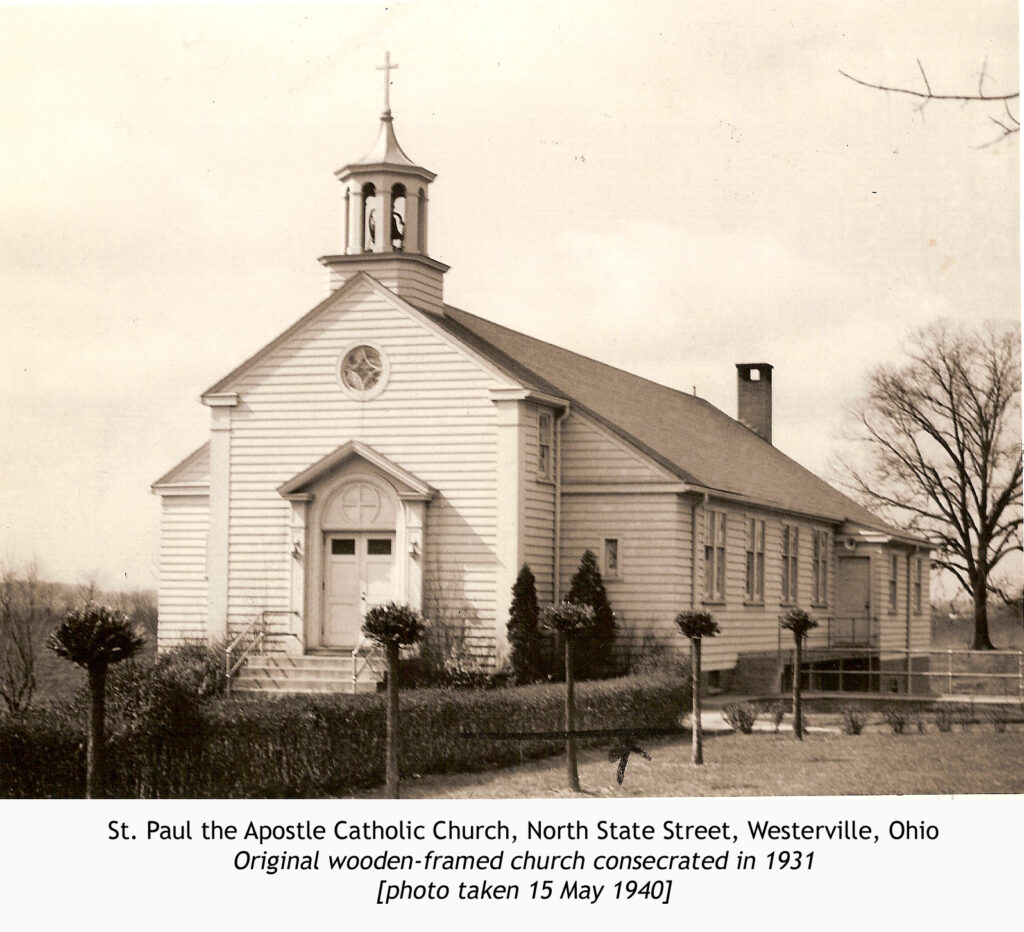
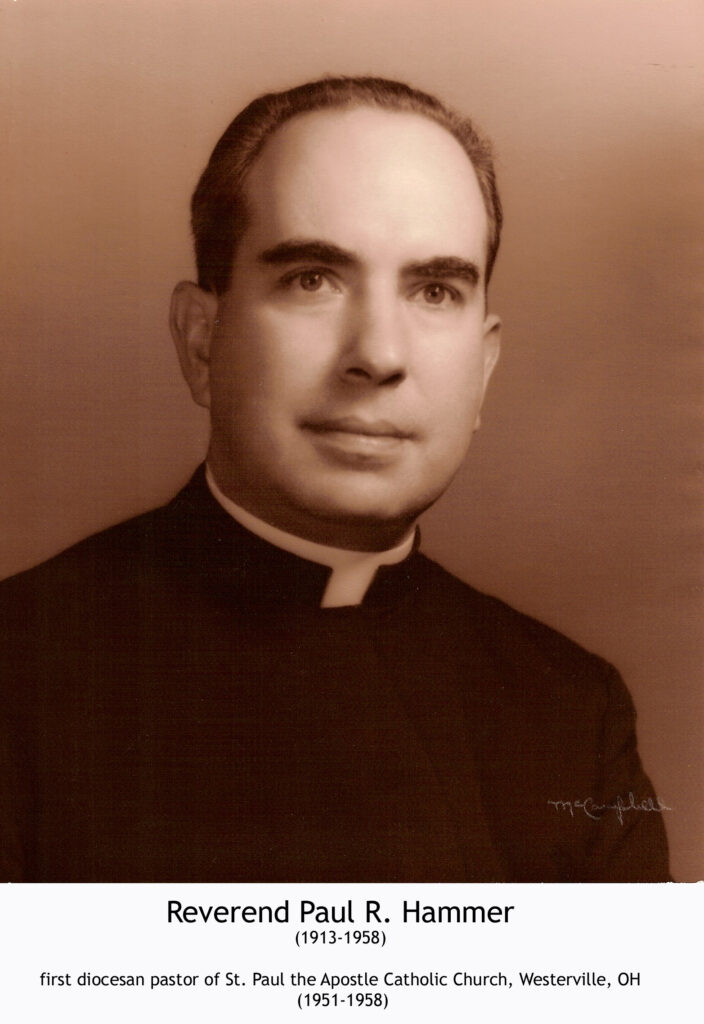
By the mid-1940’s the number of registered parishioners swelled to 255 members and witnessed the arrival of the Sisters of Notre Dame de Namur from St. Joseph Academy, who began offering religious instruction to the children of the parish. In 1951, twenty years after their arrival in Westerville, the community of Capuchin Friars retired from service to the Parish, leading Bishop Michael J. Ready to appoint Father Paul Hammer as the first diocesan pastor of St. Paul Church, a role he ably served until his death in 1958.
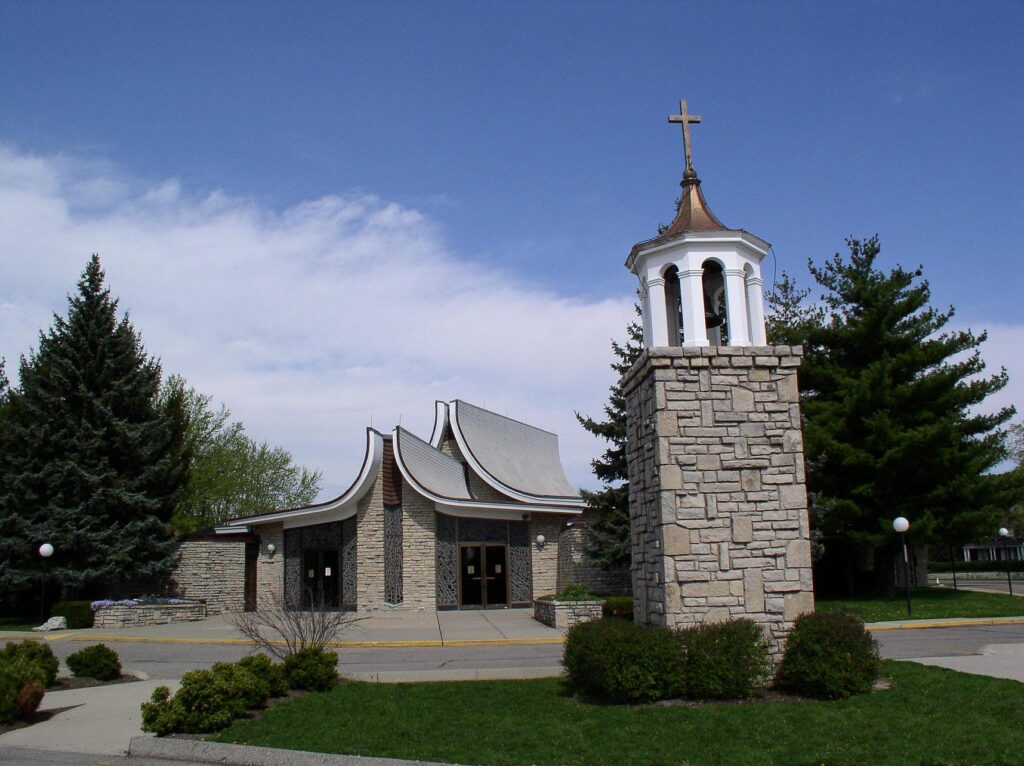
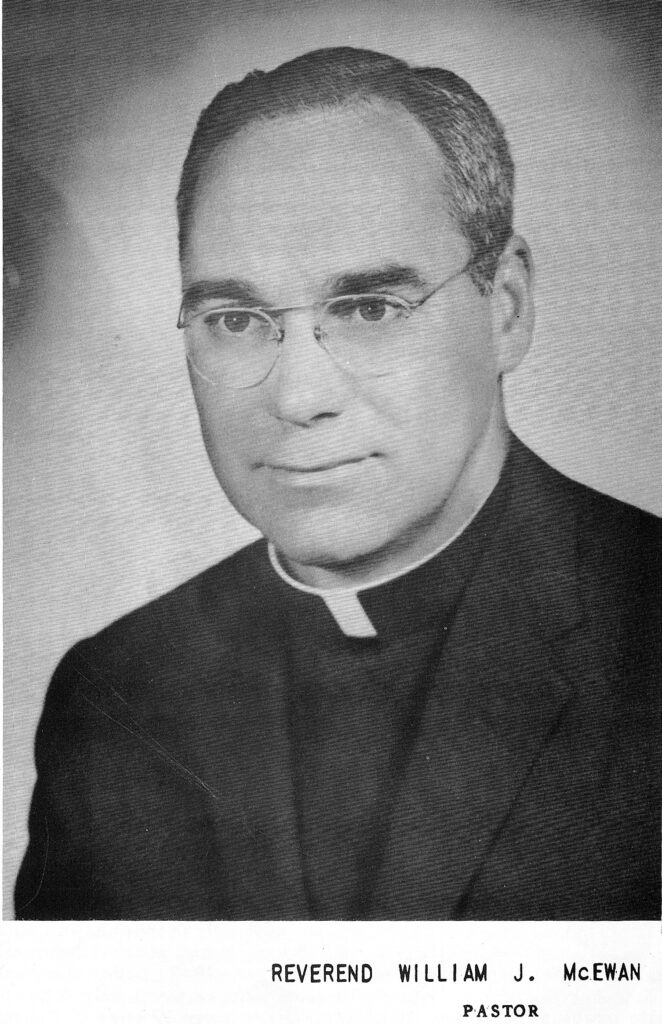
In February 1958, Father William McEwan became pastor and over the next twelve years led St. Paul’s through a number of hallmark events. The incorporation of St. Paul’s into the City of Westerville and the purchase of additional land enabled the Parish to plan and build a school that welcomed 218 students in September 1961. By the mid-1960’s it became increasingly clear that the needs of the vibrant and growing St. Paul community were stressing the capacity of the original 1931 wood frame church, prompting plans for a new church. Reflecting a contemporary design, a new church was built south of the first and was dedicated by Bishop Clarence Elwell in May 1969. Seating more than 780 parishioners, it served the parish faithfully for more than four decades.
Throughout the 1970s and 1980s, Saint Paul the Apostle Parish continued to expand rapidly. School enrollment increased, additional classrooms were constructed, and parish leadership navigated both administrative transitions and the creation of neighboring parishes to serve Westerville’s growing Catholic population. Despite these changes, Saint Paul retained a strong sense of warmth, generosity, and community life.
During the 1990s, Saint Paul continued to experience rapid growth, particularly in the school community. Enrollment increases placed new demands on facilities, and it became clear that additional space was needed to support both educational and parish life. One of the most pressing needs was a dedicated cafeteria and gathering space for students, as meals were being prepared off site and eaten in classrooms. Planning began for a major school expansion that would address these limitations while supporting the long term vitality of the parish campus.
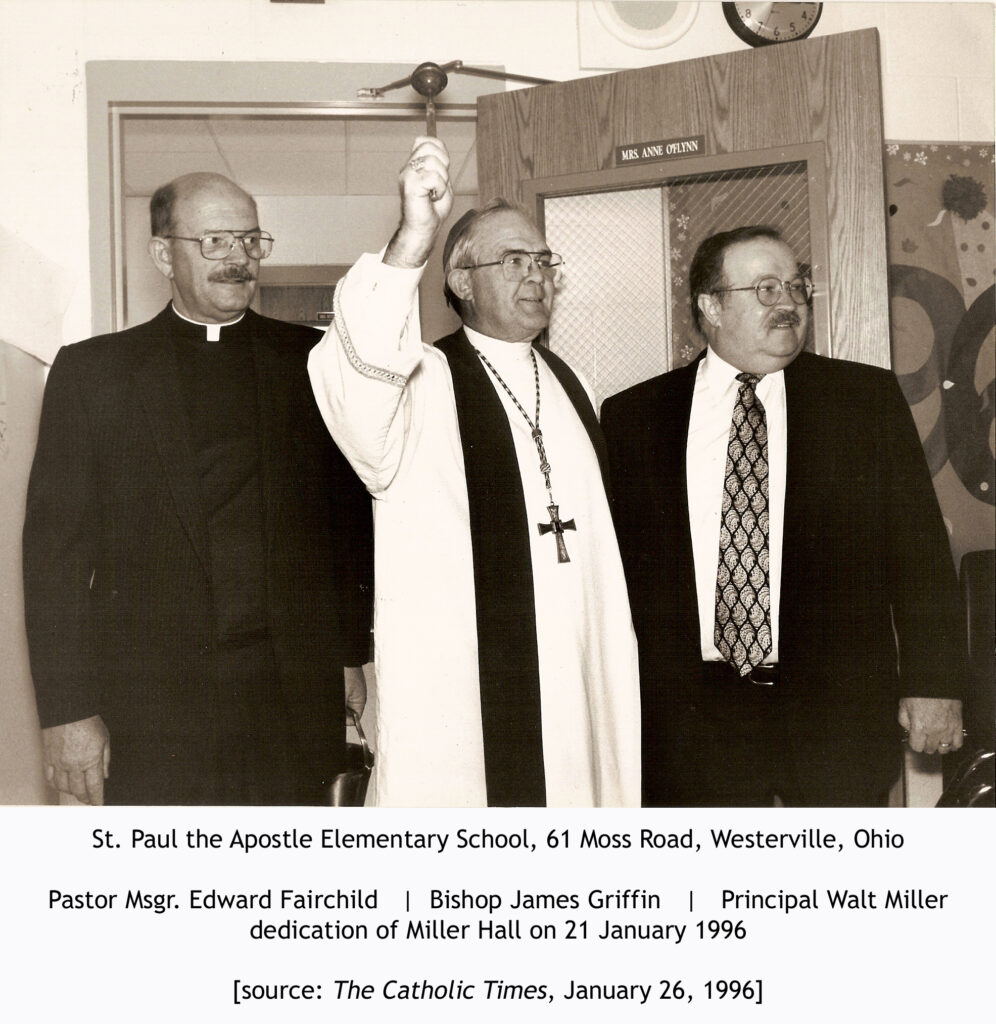
This effort resulted in the construction of Miller Hall, dedicated in 1996, which added a cafeteria and multipurpose space beneath it, along with much needed support areas for the school and parish. The project marked a significant investment in the daily life of the parish, improving the educational environment for students and creating new space for community gatherings and events. Miller Hall became an important hub of parish activity and reflected Saint Paul’s ongoing commitment to serving a growing community through careful planning, collaboration, and stewardship.
By the early 2000s, Saint Paul the Apostle Parish had become one of the largest Catholic parishes in the Diocese of Columbus, serving thousands of families and operating one of the largest Catholic grade schools in the state. The church dedicated in 1969, though well loved, could no longer adequately meet the needs of the parish’s sacramental life and growing congregation.
In 2003, Father Charlie Klinger and parish leadership began a period of discernment and long range planning focused on the future of the parish campus and the need for a new church. Parishioners were invited into the process through surveys that gathered input on worship space, parish facilities, and broader campus needs. At the same time, demographic studies were conducted to better understand future growth and guide decisions about the size and scope of the project.
A planning committee was formed in 2004 to oversee the building effort, and a parish wide fundraising campaign followed. The response reflected extraordinary generosity and sacrifice. Parishioners shared stories of delaying personal purchases or giving from significant milestones in their lives. One young boy gave half the money he received for his first communion to the building fund. These acts of stewardship revealed a deep sense of shared mission and trust in the future of the parish.
As construction progressed, members of the building committee visited the site regularly, witnessing the church take shape and offering guidance along the way. These visits became moments of gratitude and awe as the scale and beauty of the project unfolded. What emerged exceeded expectations and stood as a visible sign of unity, faith, and careful planning.
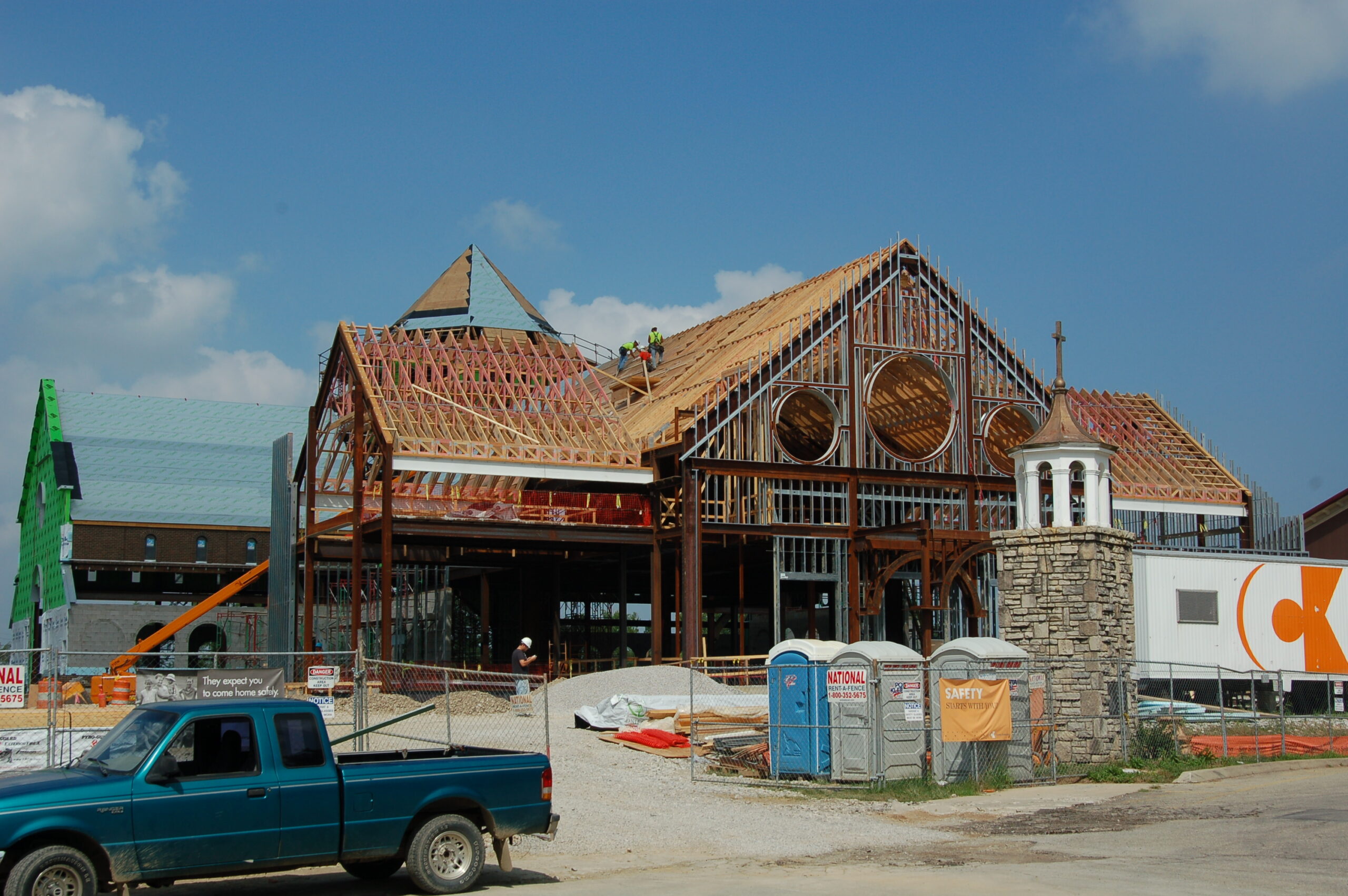
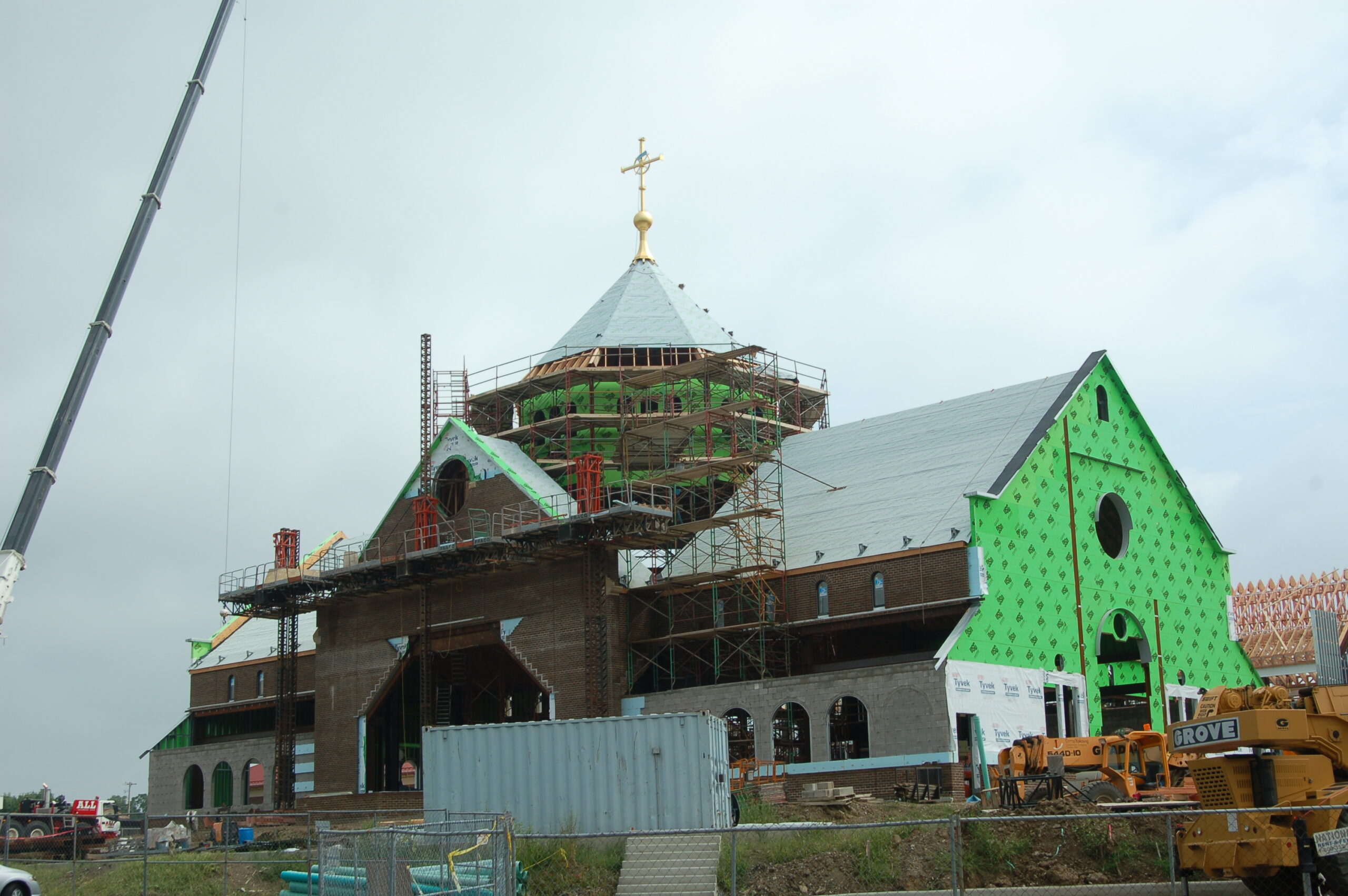
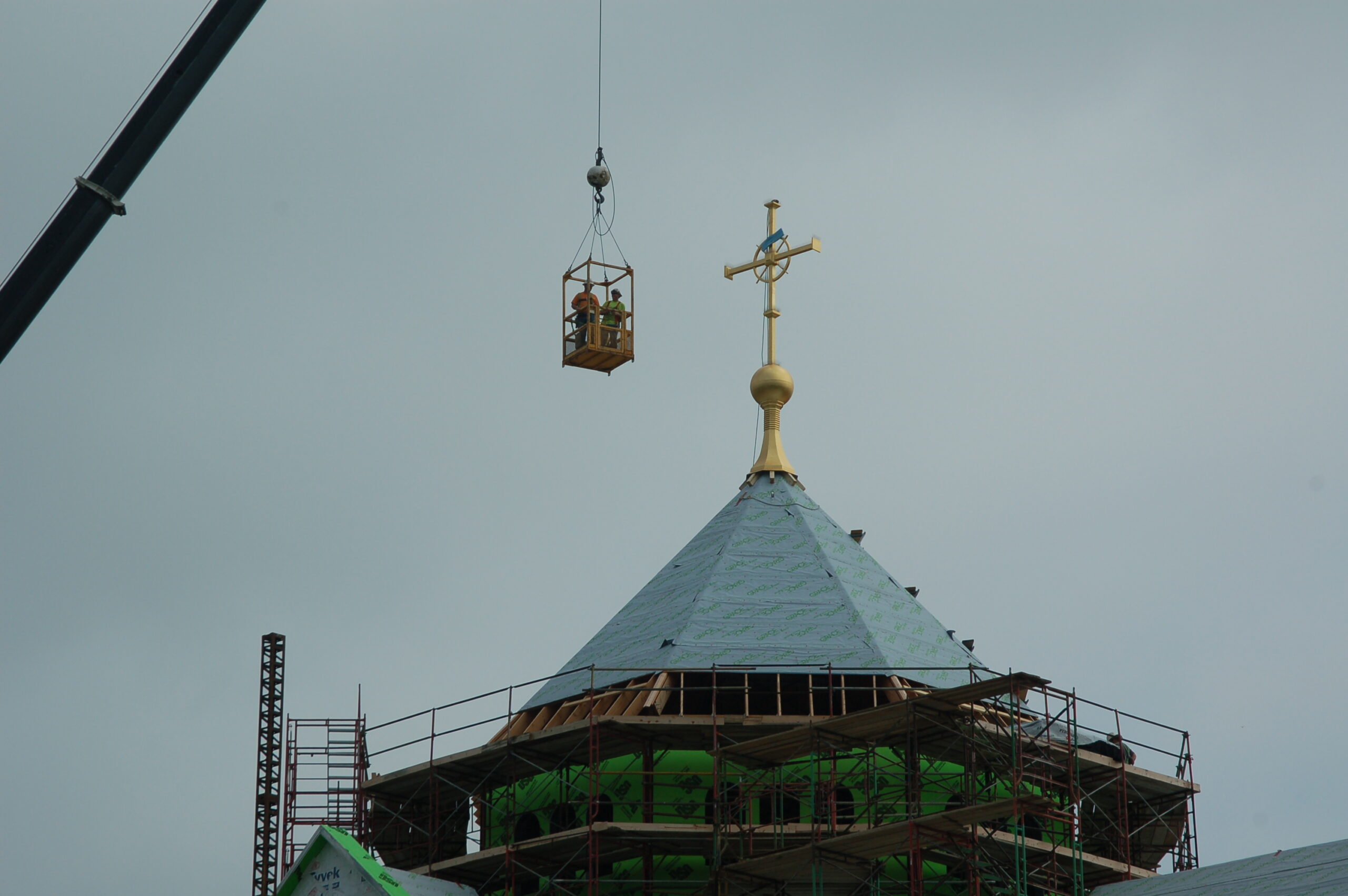
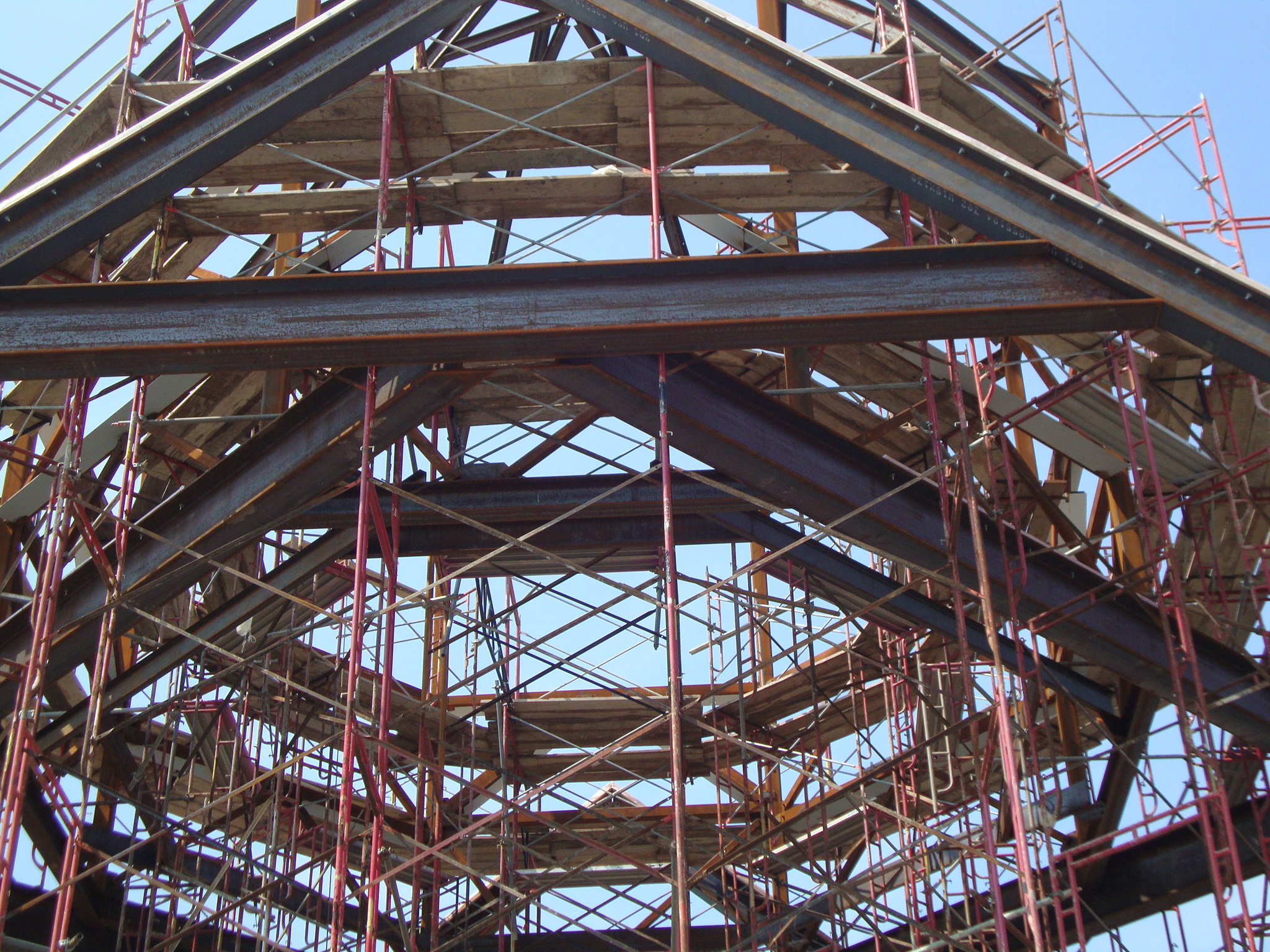
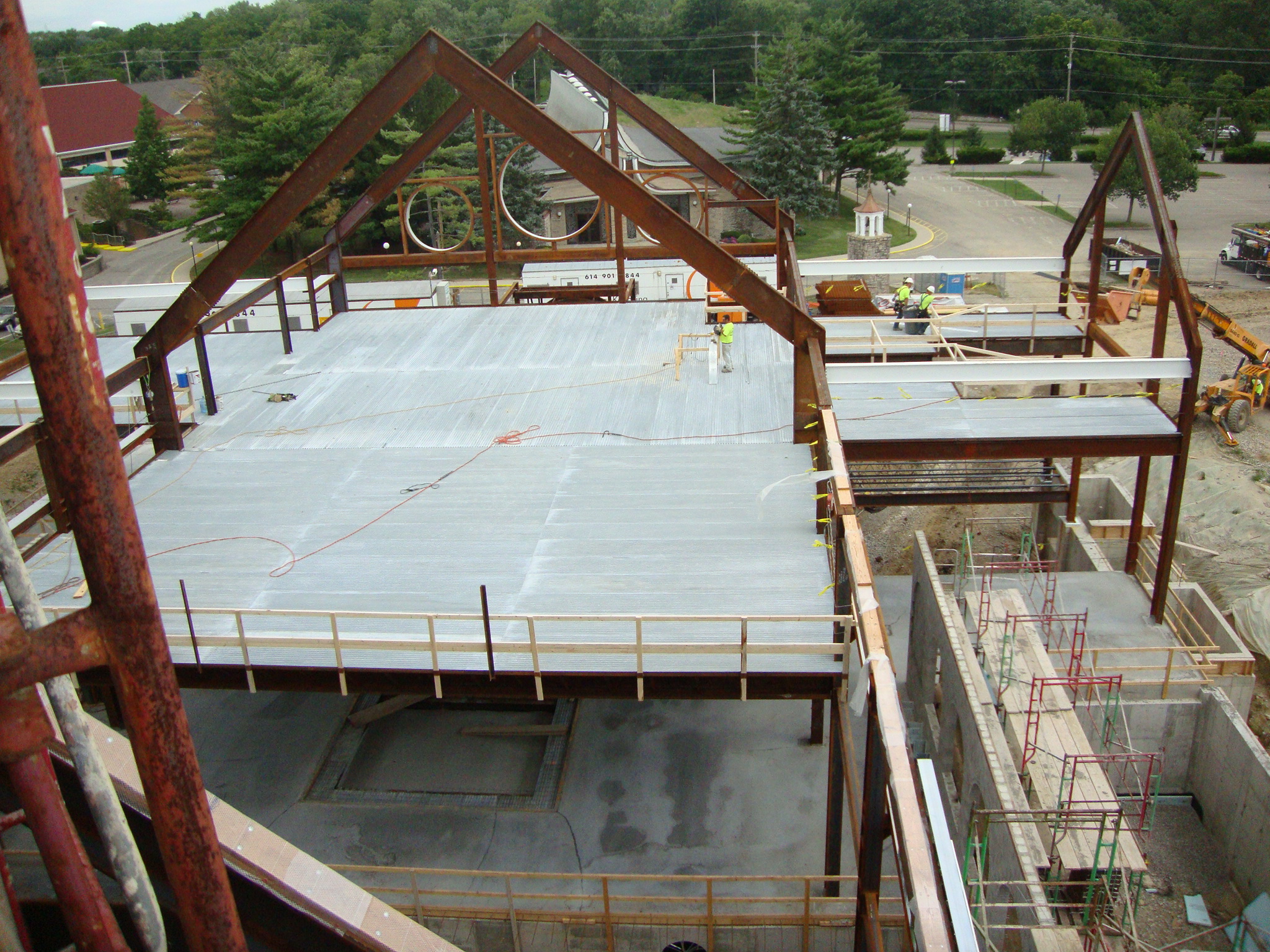
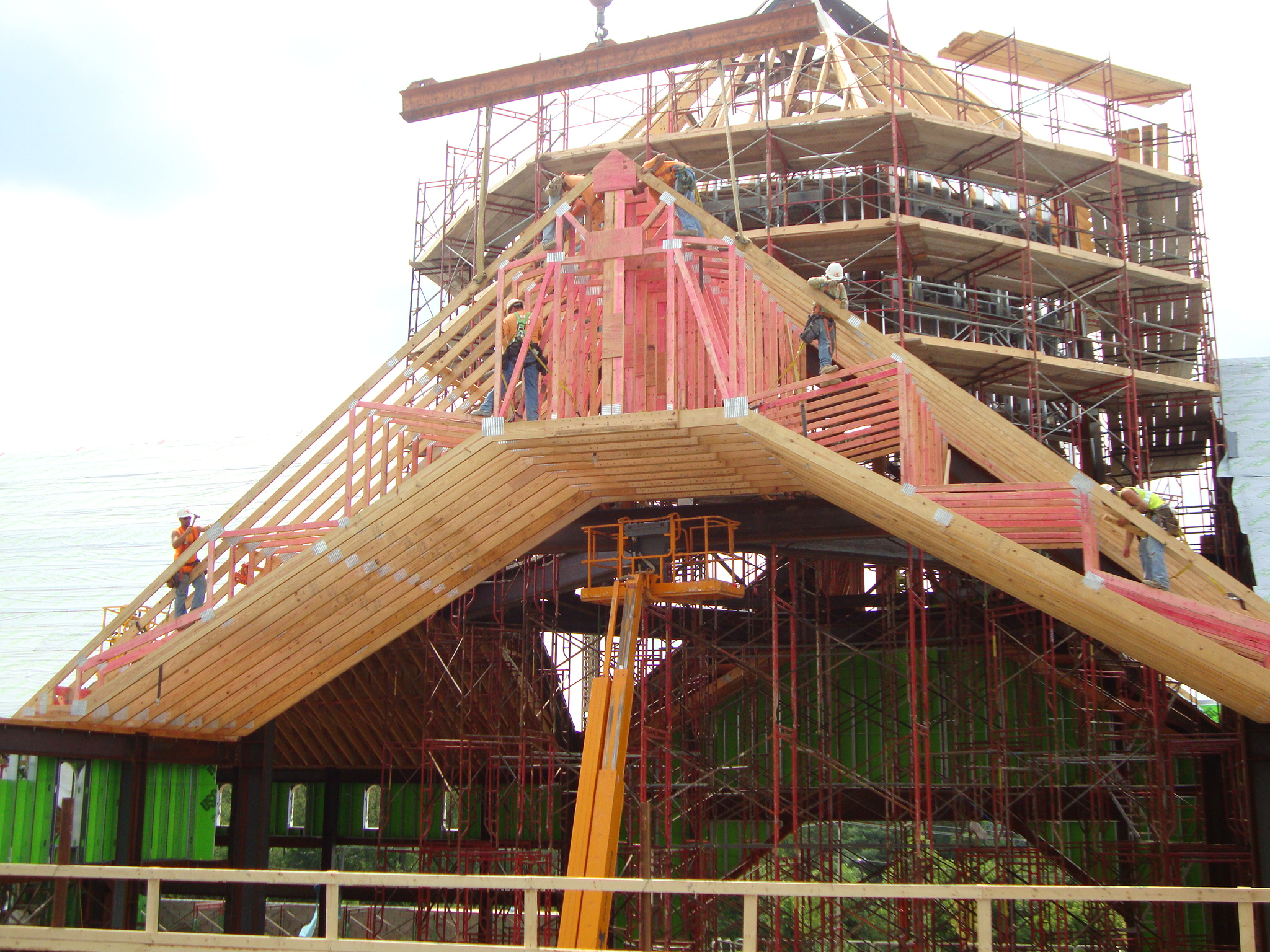
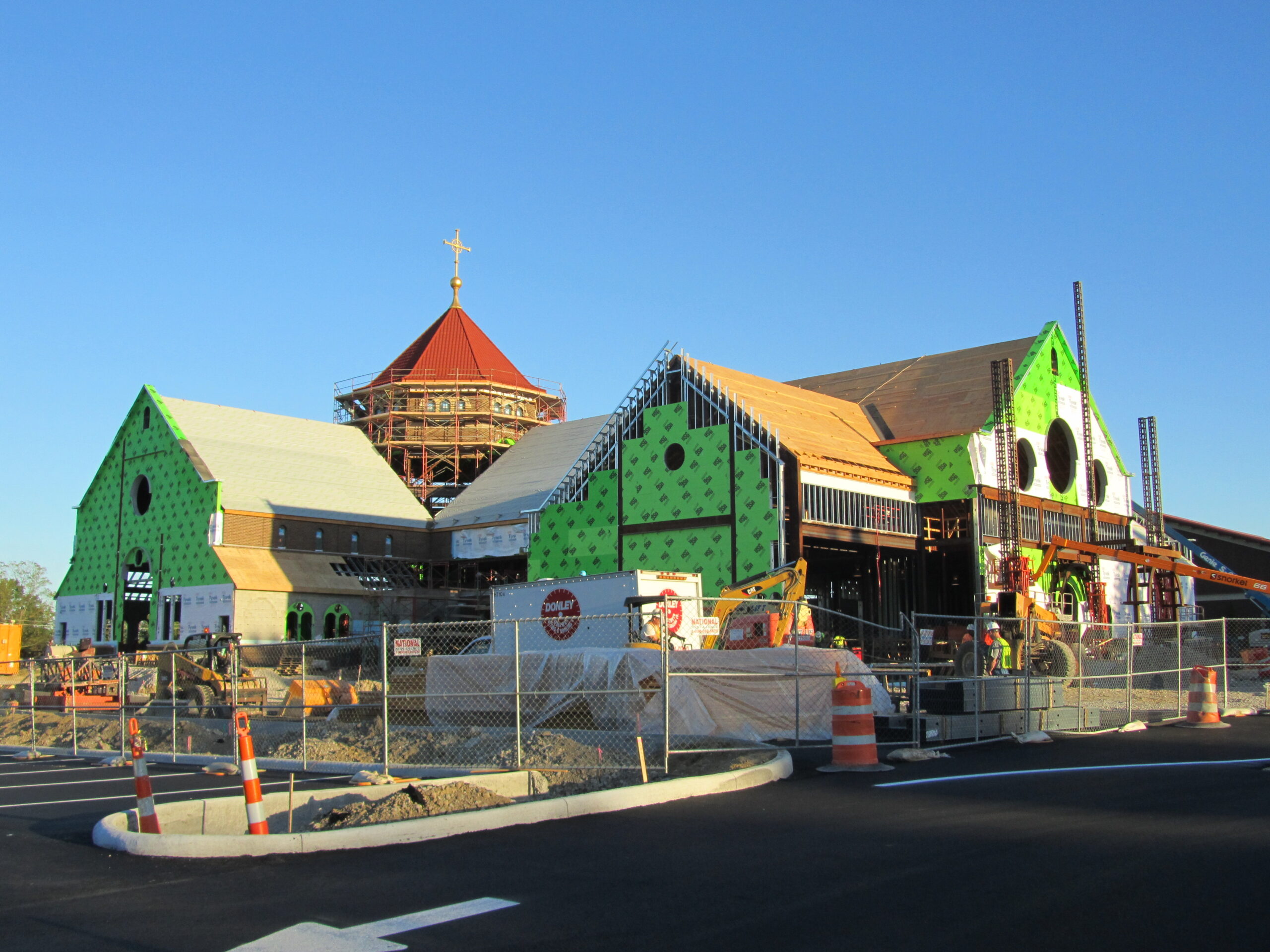
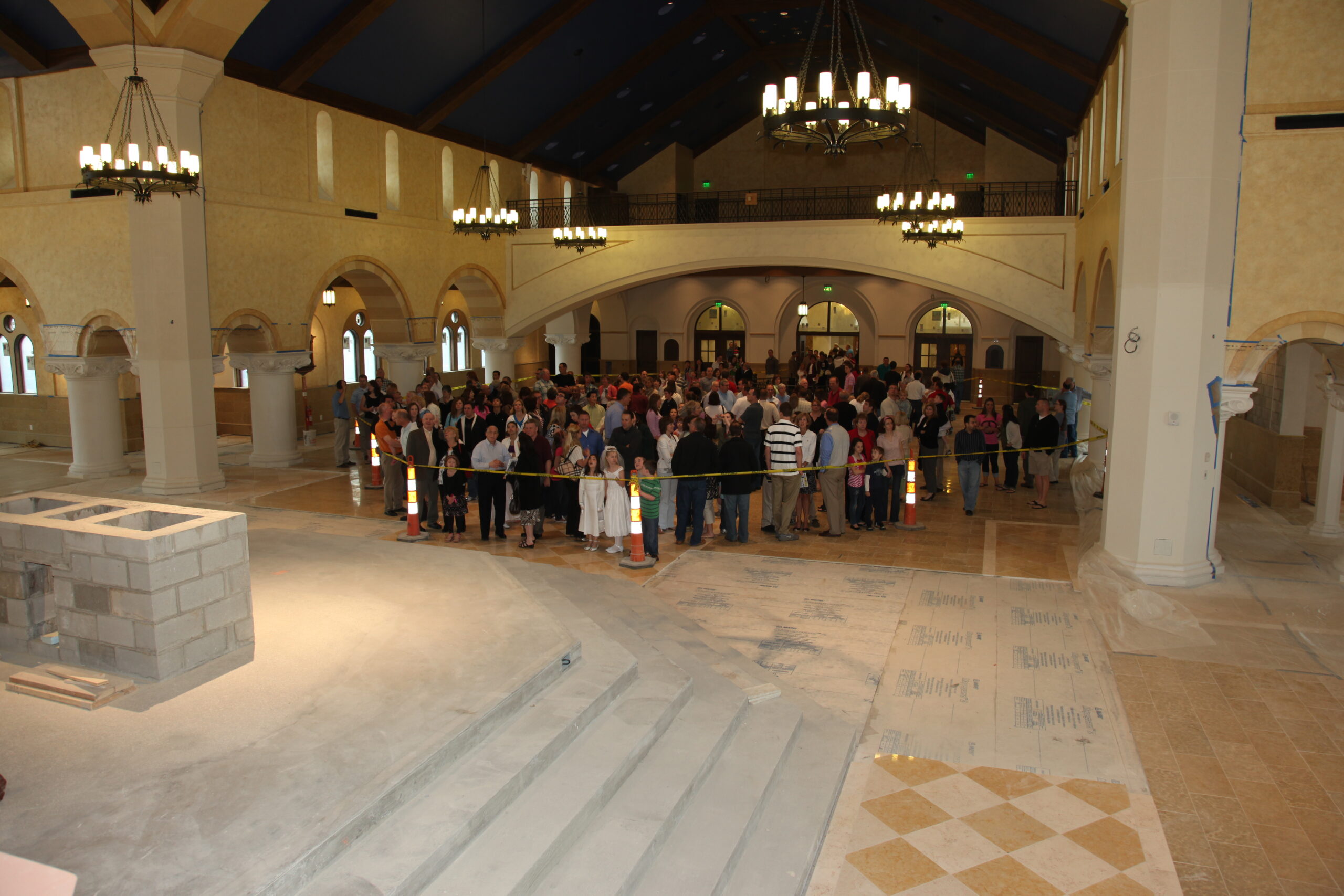
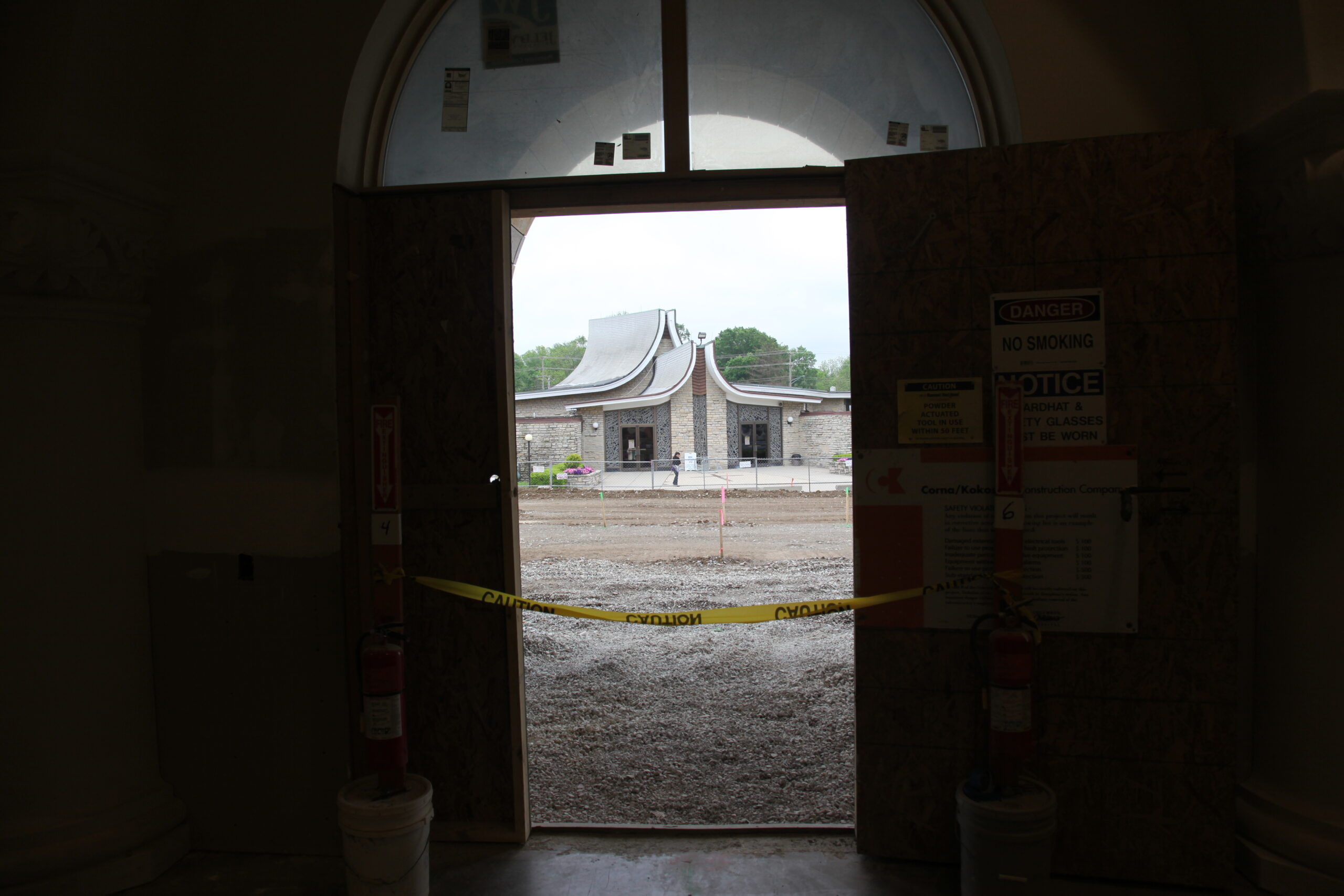
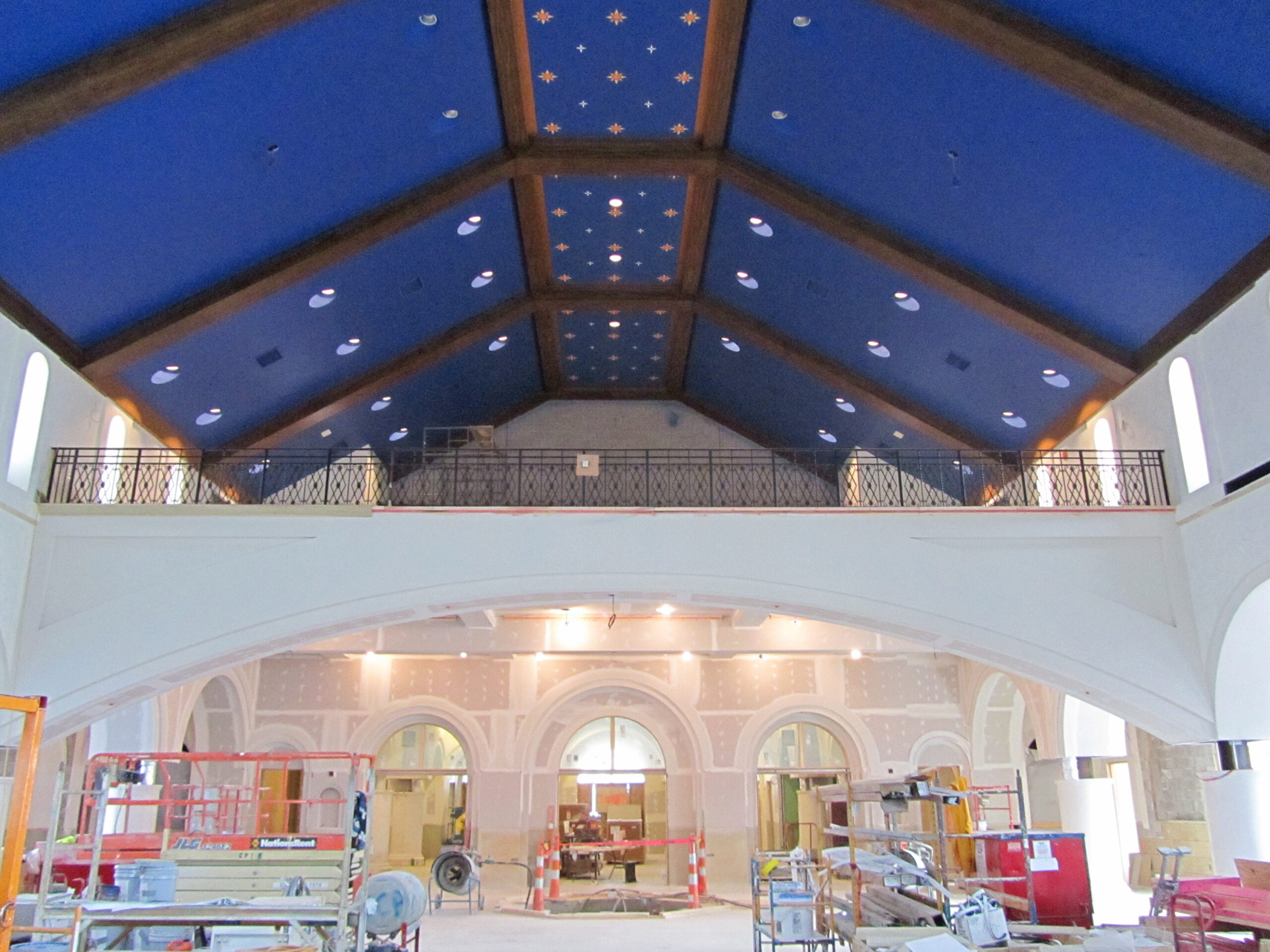
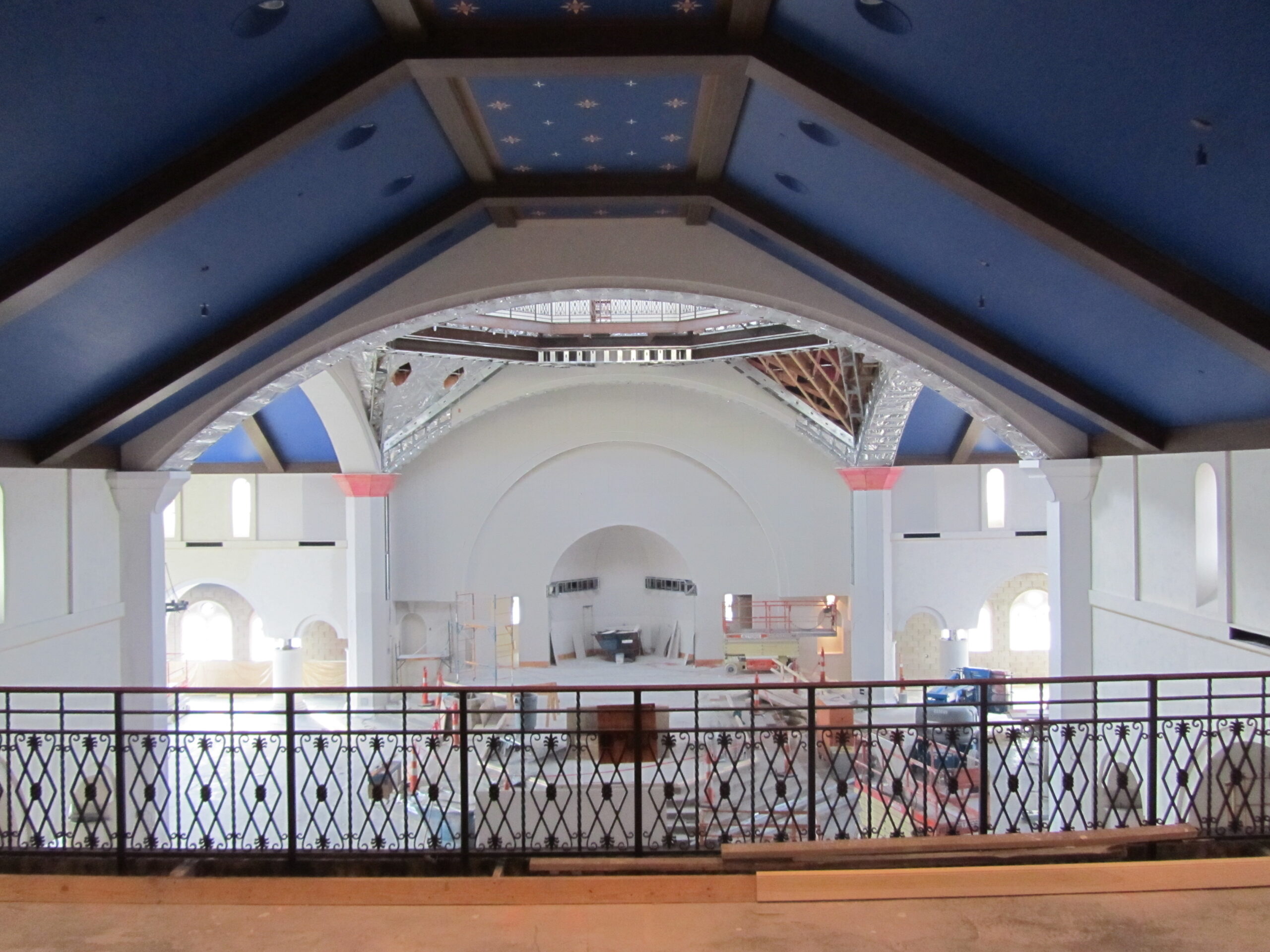
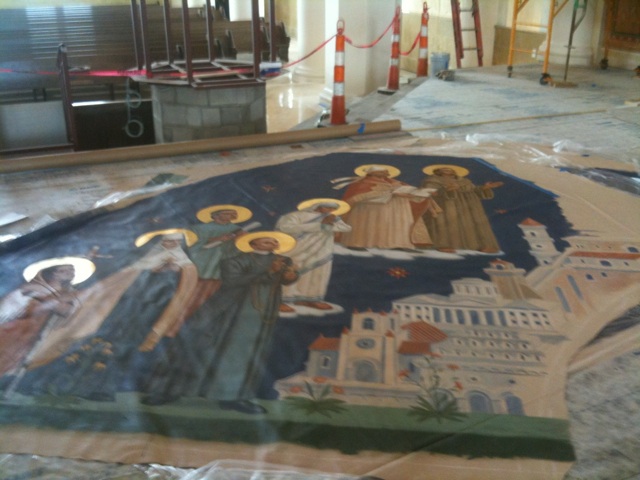
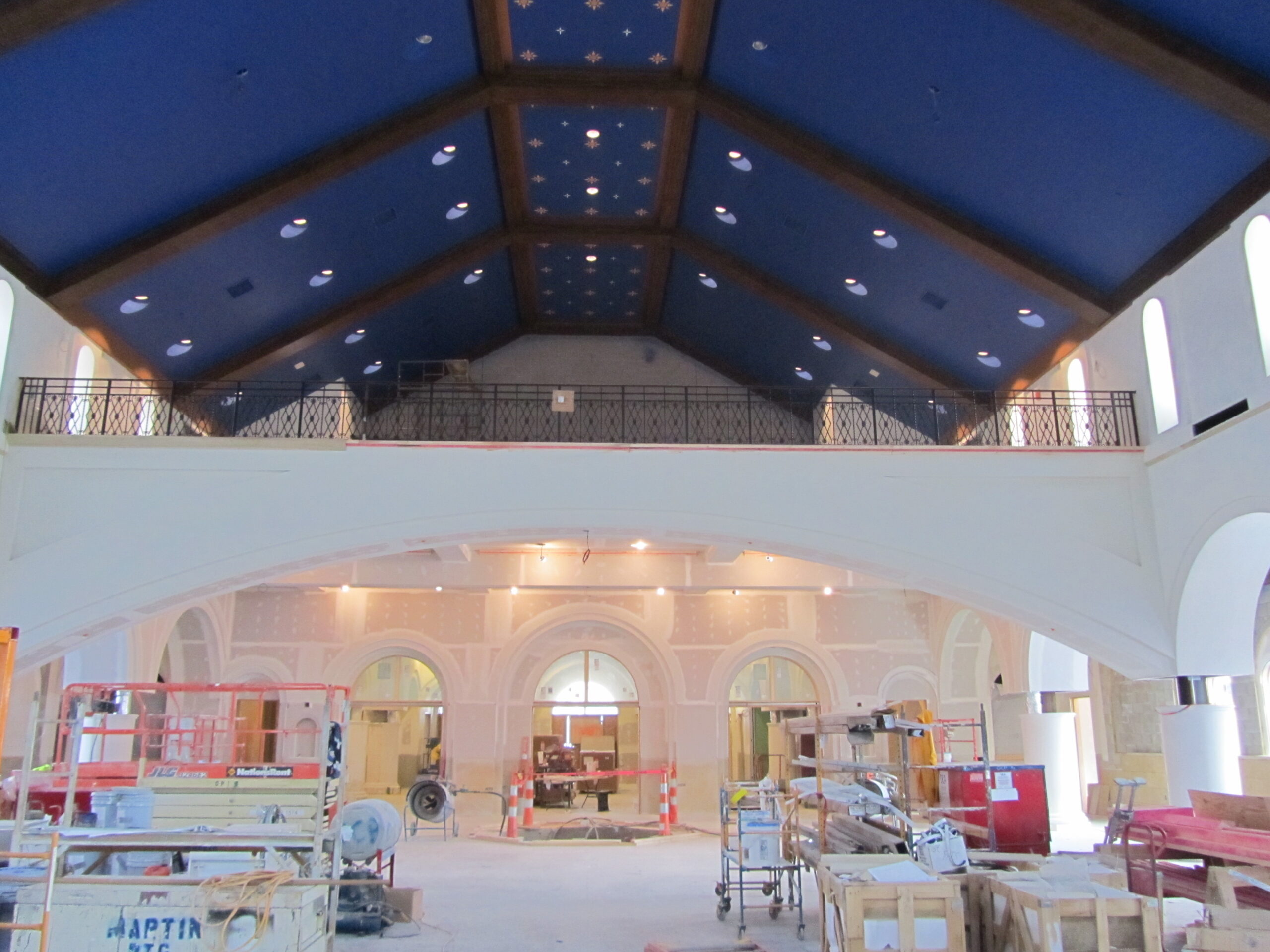
The third church was completed and dedicated on June 29, 2011 on the Feast of Saints Peter and Paul, marking one of the most significant milestones in the parish’s history. Conceived first and foremost as a place of worship, the new church also reflected the parish’s commitment to faith formation, community life, and shared prayer beyond the walls of the building itself.
In fall of 2018, St. Paul School completed the final phase of a major building campaign named “Reaching for Tomorrow.” In addition to renovating the library and primary classroom spaces, St. Paul added over 27,000 square feet of 21st Century learning spaces including a second story with 13 classrooms to accommodate 6th-8th grade students and a designated STEAM Makerspace/Lab.
Church Architecture
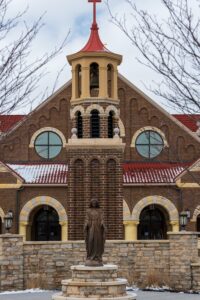
The church building is a classical Romanesque design. Romanesque architecture is based on the Roman basilica which was an oblong building with round arches used for public purposes (from administrative offices to baths). Early Christians took over this basilica design for the churches they began to build after their religion became legal in the Roman Empire in the early fourth century. Often these early churches had a clerestory (an upper section with windows) and a dome which the Romans had perfected. Later on, after about the year 1000, “Romanesque” (or Roman-like) churches began to appear in Western Europe and these structures were essentially basilicas with a “transept” or addition of an arm added at right angles to the central part or “nave” up near the sanctuary which makes the building form a cross (cruciform). In the mid to late twelfth century, the Gothic style of church architecture also appeared and it was characterized by the pointed arch rather than the round “Roman” arch but these churches were also cruciform. (Note that in the Catholic Church today, the designation of “basilica” is an honorary title for a prominent church building, such as St. Pater’s Basilica in Rome which happens to be of the Romanesque architectural style.)
Church Exterior
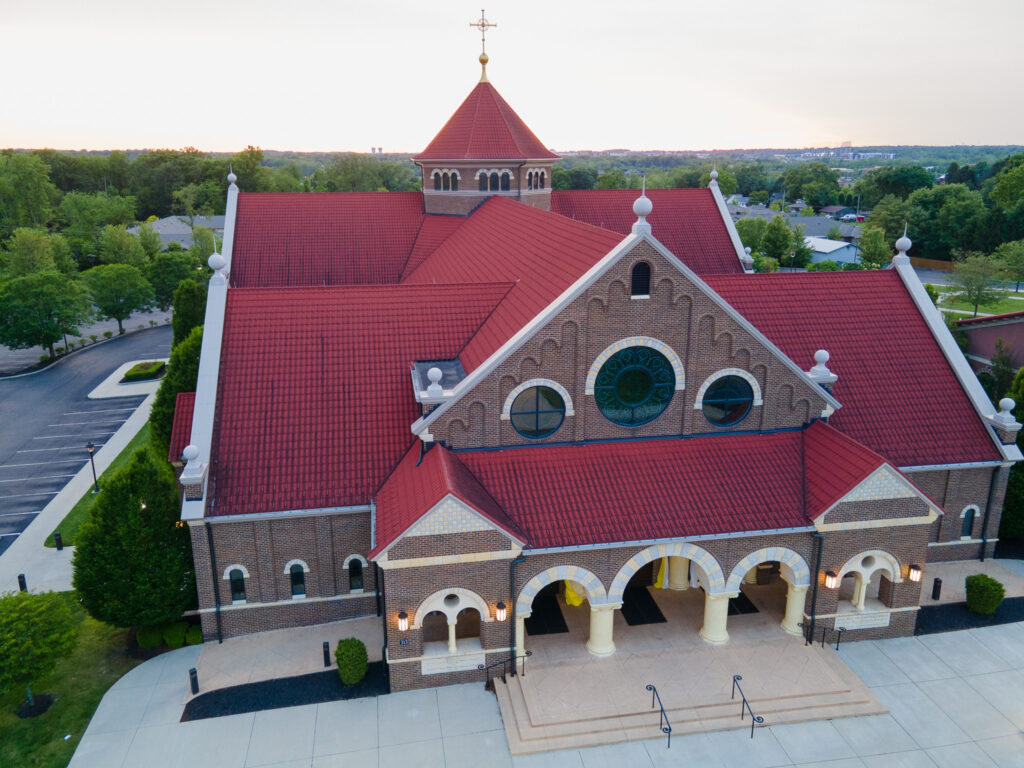
St. Paul does not have a dome as such, but rather a cupola which is positioned right over the altar. The brick of the exterior has an antique look and was chosen to match that of the Klinger Center. The arches of the exterior are accentuated with a limestone known as “Jerusalem stone.” (See below for more on this stone.) The roof is a faux tile made of aluminum which is commercially known as “allmet” and is very durable. There is a great porch defined by columns which welcomes worshippers to the church. The decorative round ball-like structures at various points on the outside are called “finials” and they adorn the gable end walls. The finials atop the chapels on the north and south sides are gold leaf on copper. But the crowning glory of the exterior is the magnificent 20 foot cross of gold leaf on aluminum which is on the top of the cupola and which makes the total height of the church 104 feet – the highest point in Westerville.
Church Interior
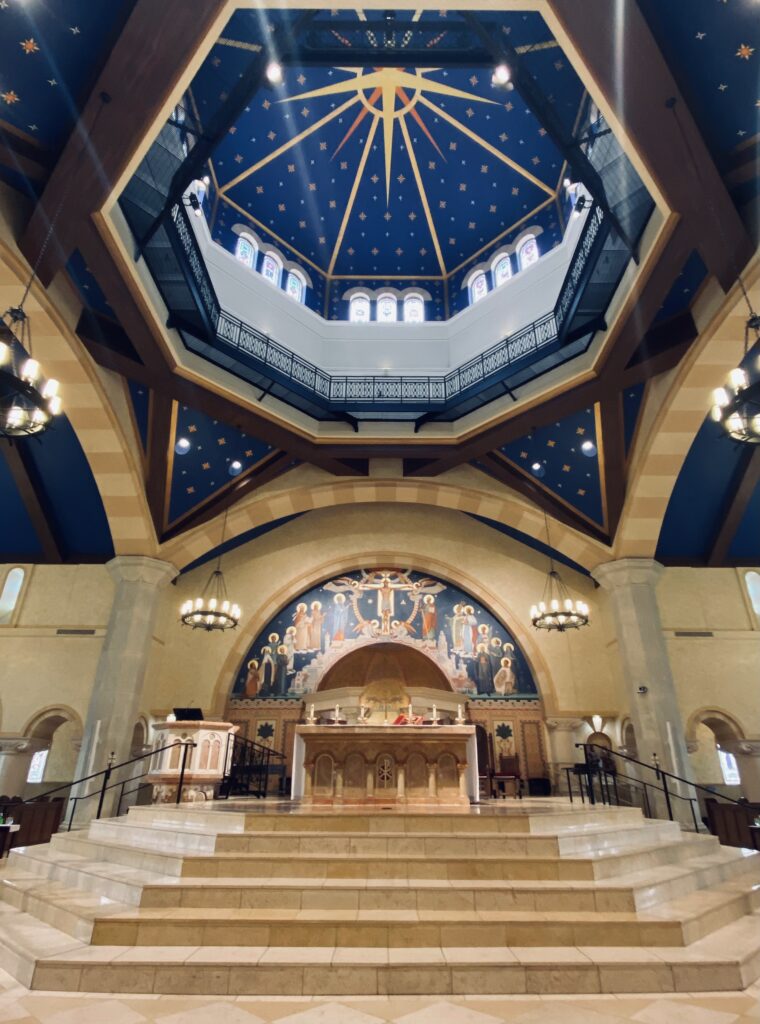
The total square footage of the building is 37,556 and the total square footage of the worship space is 22,565. The floor of the church and the wainscoting is, again, that “Jerusalem stone” which is quarried in Israel. This material is one of the hardest surfaces in the world, unlike American limestone which is quite porous. The altar of sacrifice, the altar of reservation, the pulpit, and the baptismal font are all of Jerusalem stone as well. The altars are decorated with gold and glass mosaics and feature arches and traditional symbols in the center – on the altar of sacrifice is the symbol XP (the Greek abbreviation of “Christ”) and on the altar of reservation of the Eucharist is the symbol IHS (the Greek abbreviation of “Jesus”) as well as the alpha and omega (the first and last letters of the Greek alphabet symbolizing Christ as the Beginning and the End). The beautiful fish design in the baptismal pool is of stone mosaic.
First class relics of Saint Florence (martyr executed near Montpellier, France ca. 303), Saint Aurelius (martyr, along with his wife Saint Natalia, of Cordoba, Spain in the year 852), and Saint Francis of Assisi (ca. 1181-1226); and a second class relic of our patron, Saint Paul the Apostle (a fragment of the column in the area of Rome where he was martyred) are present under back side of the altar where the priest stands. The tabernacle is bronze and is reminiscent of the Ark of the Covenant of the Hebrew Scriptures. It is partially enclosed by a structure of columns and entablatures allowing for private prayer at appropriate times but still permitting everyone to see it during Mass and other services. In the niches flanking the sanctuary are statues of the four evangelists – Mark (who wrote his Gospel first) and Matthew on the south side and Luke and John on the north side.
The pews are solid red oak and allow seating for 1400. The four massive columns framing the sanctuary are faux American limestone. The remaining interior columns are faux marble. The capitals of the columns have the unique design of the book and the sword, the attributes of St. Paul. There are two chapels in the church at the juncture of the nave and the transept; on the north side is the Holy Family Chapel and on the south side is the St. Paul Chapel. The ceiling is painted a dark blue with stars, symbolizing the heavens. In the cupola is an impressive large star surrounded by smaller ones. There are 164 windows in the church, all stained glass from the churches closed in the Cleveland Diocese.
The Mural
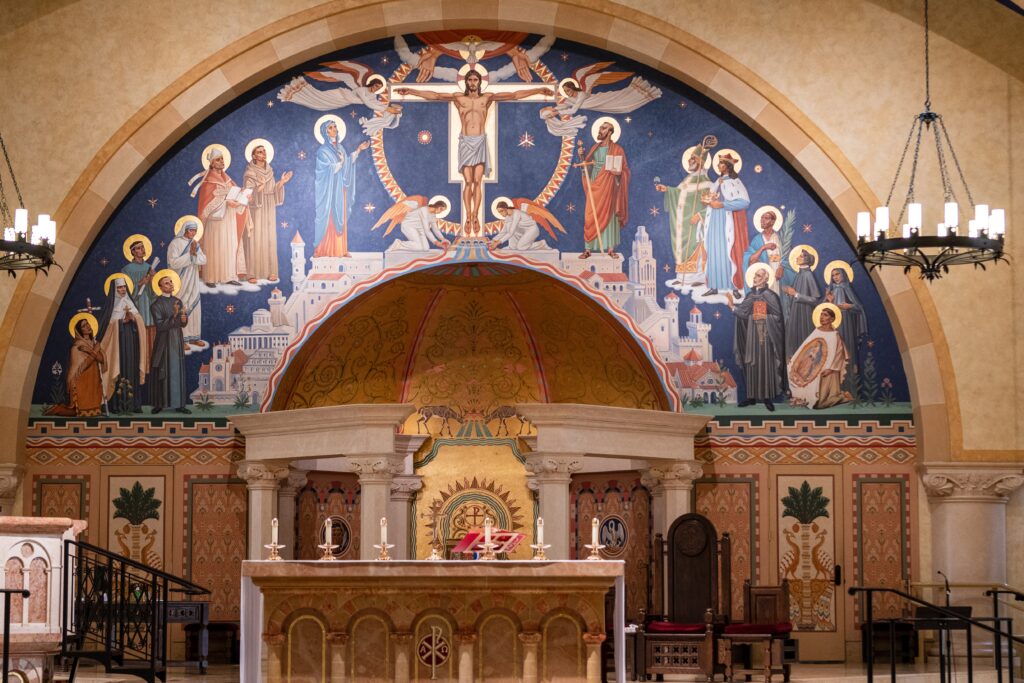
The mural behind the altar is one of the most stunning aspects of the church. It is hand-painted on canvass. It depicts Christ crucified in glory with the Father and the Holy Spirit represented above him. Angels collect his blood. And the water and blood from his sacred body, symbolizing the sacramental life of the church, flow down to the tabernacle and out into the congregation. Below Christ is an idealized heavenly city with local landmarks added. Beneath the city is a classical depiction of a heavenly garden. Behind the tabernacle is a sunburst, symbolizing Christ as the Light of the World. On the mural panels flanking the tabernacle are ancient symbols of the Eucharist, the loaves and fishes and the Pelican feeding its young. On either side of Jesus in a semicircle are saints. The first ones are Mary (on the south side) and St. Paul the Apostle (on the north). The rest of the saints were chosen as representatives of some of the ethnic groups of the parish or because they were Americans. On the south side in descending order (after Mary) are St. Francis of Assisi, the “Apostle to the Germans” St. Boniface, St. Mother Theresa, the Filipino martyr St. Lawrence Ruiz, the American St. John Neumann, the American St. Katherine Drexel, and the Native American St. Kateri Tekakwitha. On the north side in descending order (after St. Paul) are St. Patrick, the Polish Prince St. Casimir, the Ugandan African martyr St. Charles Lwanga, the Jesuit North American martyr St. Isaac Jogues, the American St. Elizabeth Ann Seton, the American St. Frances Cabrini, and the Mexican St. Juan Diego with the image of our Lady of Guadalupe (the Patroness of the Americas).
Pastors:
Father Paul Hammer (1951-1958)
Father William McEwan (1958-1970)
Father Leo Sullivan (1970-1972)
Father Patrick J. Byrne (1972-1975)
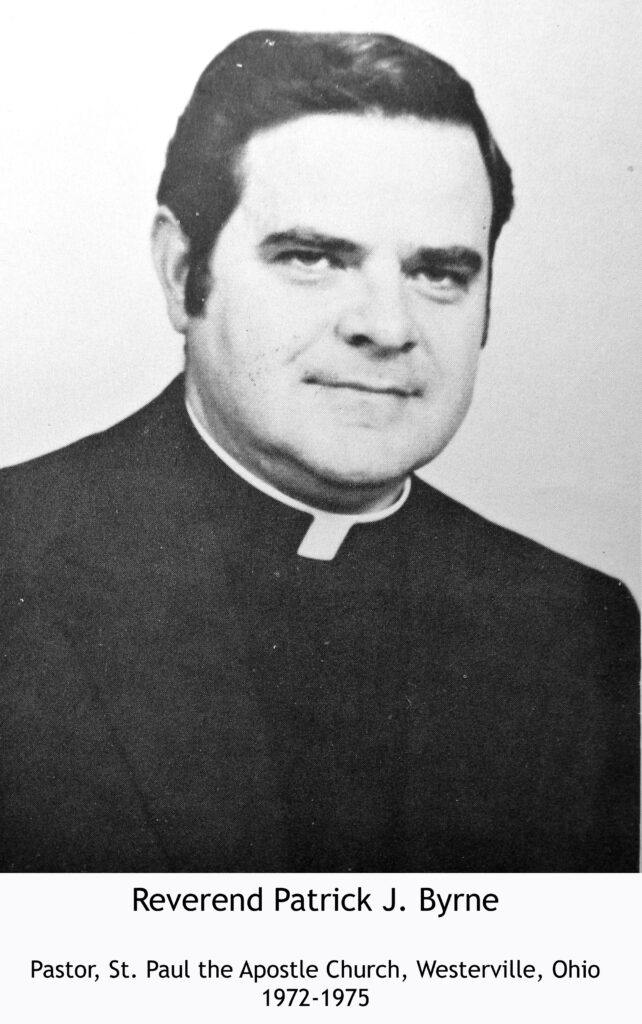
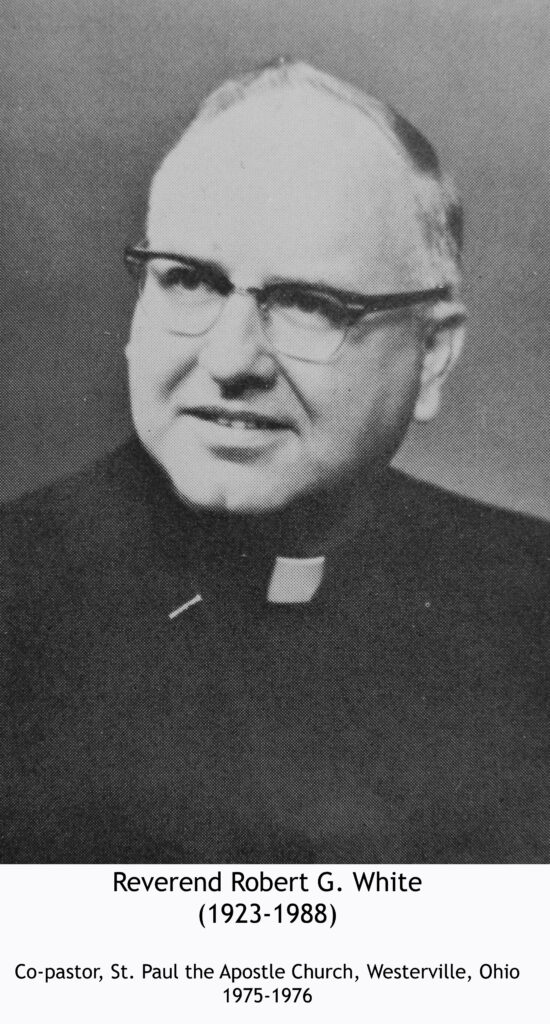
Father Robert White (Co-Pastor, 1975-1976)
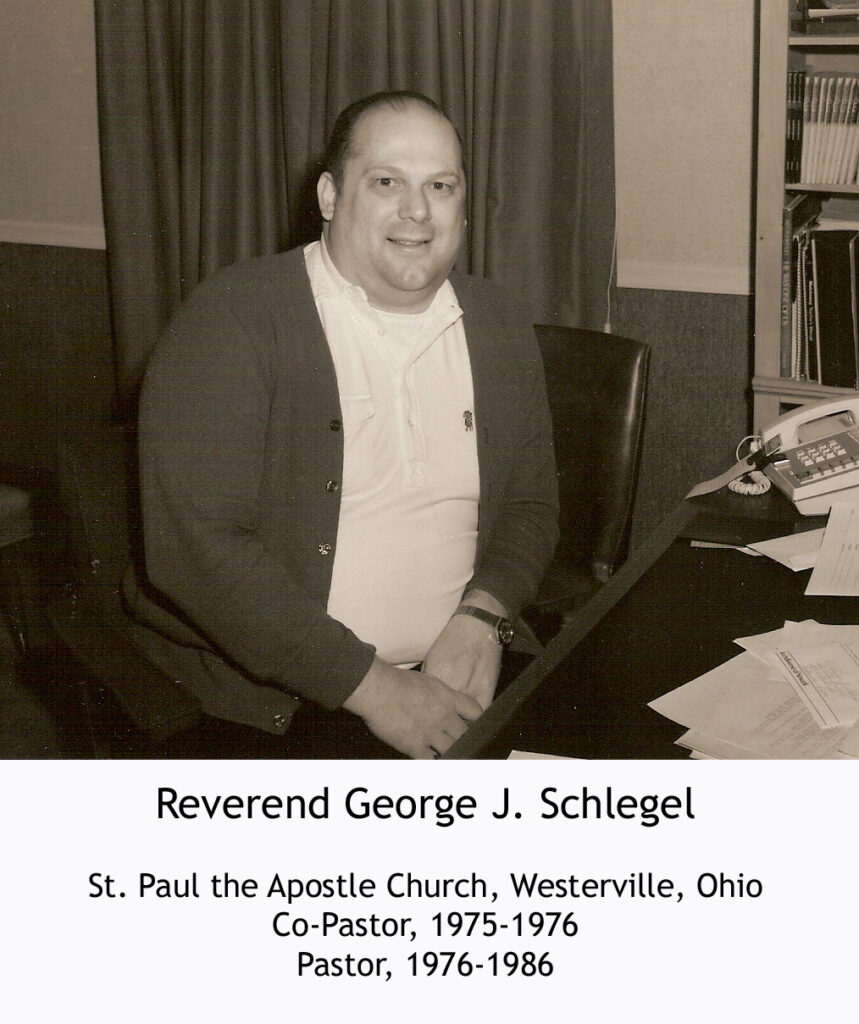
Msgr. George J. Schlegel (Co-Pastor 1975-1976, Pastor 1976-1987)
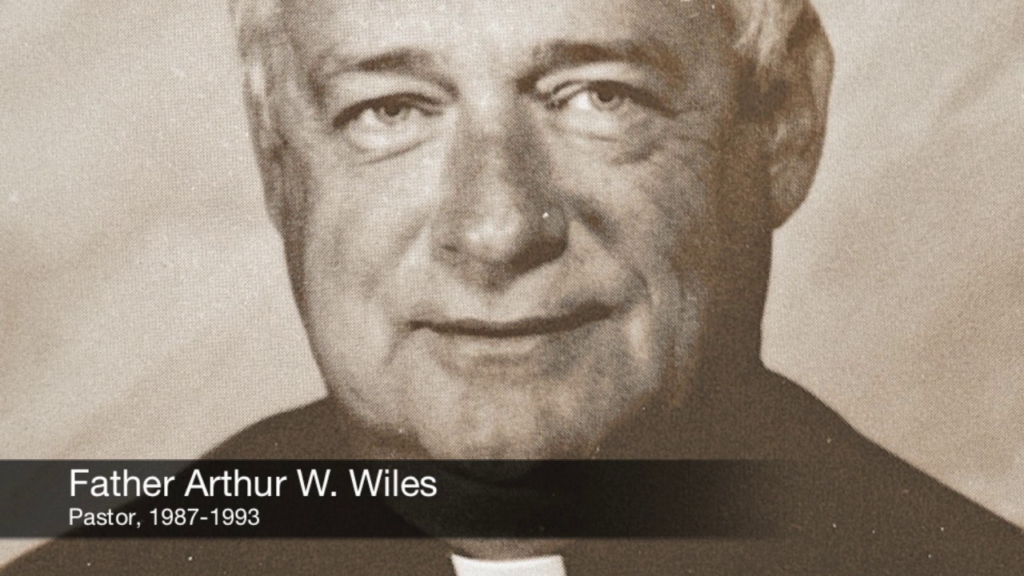
Father Arthur W. Wiles (1987-1993)
Msgr. Edward Fairchild (1993-2003)
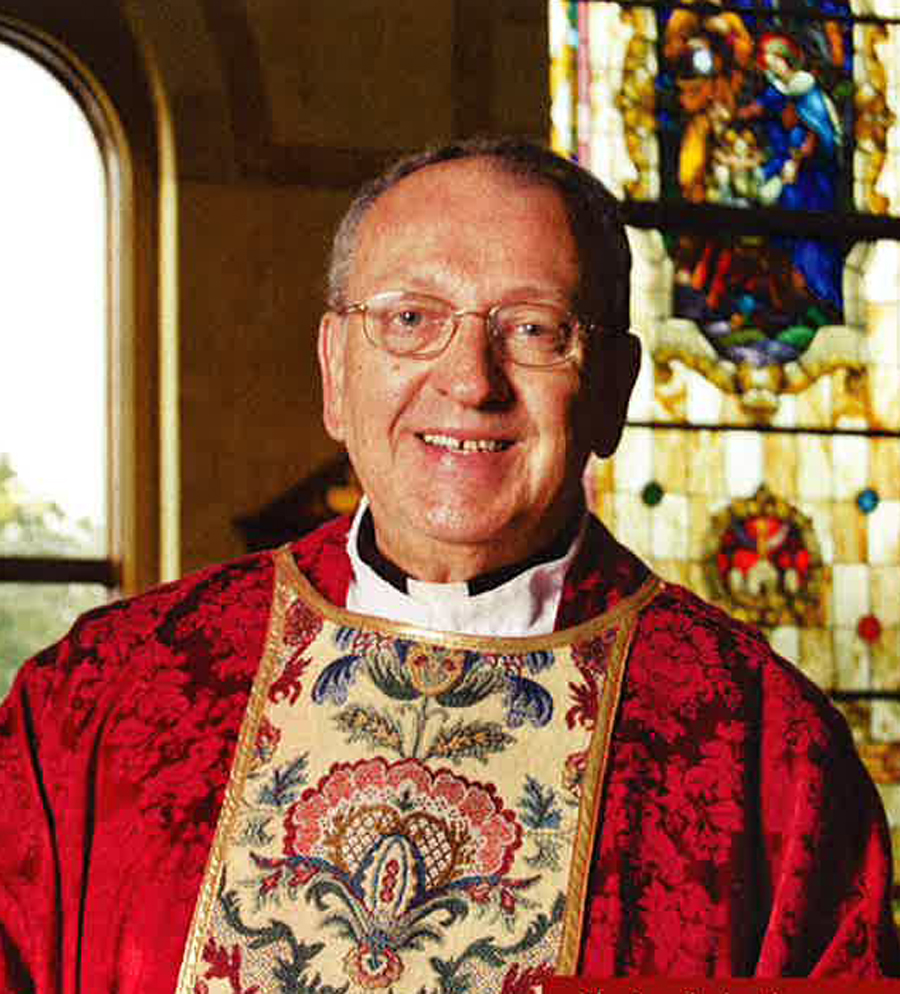
Father Charlie Klinger (2003-2019)
Father Jonathan Wilson (2019-pesent)